
FMP
API-Driven Competitor Benchmarking: A Complete Analyst Framework for Peer Comparison Using FMP Data
Dec 04, 2025(Last modified: Dec 12, 2025)
When your peer analysis lives in scattered spreadsheets and ad-hoc slides, it stops being a decision tool and becomes a reporting artifact. API-driven competitor benchmarking solves that by grounding every peer comparison in standardized, continuously refreshed data.
This article walks through a complete, analyst-first framework for building a rigorous peer benchmarking model with FMP—without focusing on code. Instead, it focuses on how to think: which datasets to use, how they fit together, and how to spot the contradictions that reveal true competitive edge.
What is API-driven competitor benchmarking with FMP?
API-driven competitor benchmarking is the practice of building a repeatable peer comparison model by pulling standardized data from multiple APIs—rather than manually copying figures from filings or slide decks.
With Financial Modeling Prep (FMP), you can centralize:
- Peer definitions via the Stock Peer Comparison API
- Core financials via the Income Statement API and Key Metrics API
- Profitability and valuation via the Financial Ratios API
- Forward expectations via the Financial Estimates API and Price Target Summary API
- Business mix via the Revenue Product Segmentation API
- Management commentary via the Latest Earning Transcripts API
- Market performance patterns via the Stock Quote API
The result is a living, multi-layer peer framework that is refreshable on demand—ideal for equity research, FP&A, strategy, and private markets.
Step 1: Define and validate your peer set with the Stock Peer Comparison API
Good benchmarking starts with a defensible peer set. The Stock Peer Comparison API returns companies that share an exchange, sector, and a comparable market cap range for a given ticker.
For an analyst, that gives you a first-pass peer universe that's:
- Objective: Based on sector and size, not just anecdotal “who feels similar.”
- Repeatable: Same logic every time you refresh.
- Scalable: Quick to extend across a watchlist or portfolio.
A practical workflow:
1. Anchor on a focal company.
Use the Stock Peer Comparison API for your target symbol to retrieve an initial list of comparables and basic descriptors ( exchange, market cap).
2. Apply analyst judgment.
Analysts refine peers based on business model, geography, capital structure, or product focus.
-
- Remove firms with structurally different models (e.g., hardware vs. subscription).
- Add “aspirational” peers that management consistently references in investor decks.
3. Document inclusion criteria.
For each peer, tag why it's included: same revenue model, same TAM, similar growth stage, etc. This turns your peer group from “a list” into a methodology.
4. Standardize across teams.
Use the same peer-selection logic across equity research, FP&A, and strategy to avoid conflicting narratives in capital markets days, board materials, and internal dashboards.
If your team works mostly in spreadsheets rather than code, FMP's Excel and Google Sheets add-ons can surface peers directly into models, no scripting required.
Step 2: Build a fundamentals baseline with Income Statement and Key Metrics APIs
Once peers are set, the next layer is a fundamentals baseline: how do revenue, margins, and scale compare across the group?
The Income Statement API provides standardized income statements—revenue, COGS, operating expenses, operating income, net income—on annual and quarterly frequencies.
The Key Metrics API consolidates core KPIs such as EPS, free cash flow, return on equity, and other valuation-ready statistics.
For your benchmarking model:
1. Normalize timeframes.
- Use a consistent 3-year history plus TTM (trailing twelve months) for each peer.
- Trailing data helps smooth fiscal calendars and seasonality.
2. Construct core comparison KPIs:
- Revenue CAGR (3-year) - growth leadership vs. peers.
- Gross margin / operating margin / net margin - profitability profile and operational leverage.
- R&D and S&M as % of revenue - reinvestment intensity vs. scale.
3. Create an at-a-glance peer table.
A simple view might look like:
|
Symbol |
Rev 3Y CAGR |
TTM Op Margin |
TTM Net Margin |
FCF Margin |
Size (TTM Revenue) |
|
AAPL |
8% |
30% |
25% |
24% |
$3xxB |
|
Peer 1 |
5% |
18% |
15% |
10% |
$8xB |
|
Peer 2 |
12% |
10% |
8% |
5% |
$1xB |
All of these columns can be populated using a mix of Income Statement and Key Metrics data.
4. Tie to strategic questions.
- Who is growing faster but accepting lower margins?
- Who is mature but highly cash-generative?
- Which peers appear to be sub-scale given their investment spending?
External research consistently shows that ratio and KPI analysis remain central to cross-company benchmarking—particularly when assessing profitability trends and capital efficiency across industries.
Step 3: Add profitability and valuation context with Financial Ratios APIs
Raw margins and growth only go so far. To understand relative quality and valuation, your framework needs ratios derived from those statements.
The Financial Ratios API and provide liquidity, profitability, efficiency, leverage, and valuation ratios such as gross margin, ROE, current ratio, asset turnover, and P/E.
For peer benchmarking:
- Profitability ratios (ROE, ROA, net margin) show who converts revenues into profits most effectively.
- Efficiency ratios (asset turnover, inventory turnover) reveal operational discipline.
- Leverage ratios (debt-to-equity, interest coverage) highlight balance-sheet risk.
- Valuation ratios (P/E, EV/EBITDA, P/B) frame how the market prices those fundamentals.
This is where you begin to see structural vs. cyclical differences:
- A company with higher ROE and stable margins but only a modest P/E premium might be under-appreciated.
- Another with average profitability but a rich multiple likely relies on narrative, product optionality, or future growth that should show up in other datasets (estimates, transcripts, segments).
Industry practitioners and research providers emphasize ratios as the backbone of benchmarking, precisely because they turn raw statements into comparable performance signals.
In your model, build a “scorecard” that:
- Ranks each peer on 5-10 core ratios.
- Flags top-quartile and bottom-quartile outliers.
- Links each ratio back to a strategic interpretation (e.g., high leverage + weak coverage = constrained strategic flexibility).
Step 4: Bring in forward expectations with Financial Estimates and Price Target Summary
Historical performance tells you what peers have done; forward expectations reveal how the market thinks the race will evolve.
The Financial Estimates API aggregates analyst forecasts for revenue, EPS, and other metrics, including consensus levels and, in many cases, revisions over time.
The Price Target Summary API summarizes analyst price targets—average, high, low, and counts across horizons—providing a compact view of sell-side conviction and dispersion.
Incorporate these into your framework by:
1. Mapping growth vs. expectations.
- Compare historical revenue CAGR and margin trajectory against forward revenue and EPS growth.
- Identify peers where expectations are meaningfully above or below the company's actual track record.
2. Crossing valuation with targets.
Build a matrix by peer of:
- Current forward P/E or EV/EBITDA (from Financial Ratios API).
- Upside/downside to consensus price target (from Price Target Summary API).
3. This surfaces patterns like:
- High valuation + high target upside (consensus is leaning into a structural thesis).
- Low valuation + muted or negative target (the market is discounting risks not yet evident in financials).
4. Monitoring estimate drift.
Over time, use Financial Estimates API to track whether revisions are converging or diverging across peers—particularly around catalysts such as product launches or regulatory changes.
For FP&A and strategy teams, these datasets become a way to benchmark internal plans against the external consensus, highlighting where internal optimism or conservatism diverges from peers.
Step 5: Contrast business models with Revenue Product Segmentation
Peers with similar top-line growth and margins can still be fundamentally different businesses. To understand where performance comes from, you need segment-level data.
The Revenue Product Segmentation API breaks down revenue by product line, enabling analysis of which categories drive growth, margins, and cyclicality.
Segment analysis is widely recognized as a powerful tool for identifying profit pools, under-performing lines, and strategic focus areas.
In your benchmarking model:
1. Standardize segment labels.
- Map company-specific segment names into a common taxonomy (e.g., Core Software, Payments, Hardware, Services).
- This allows cross-company views like “% of revenue from recurring SaaS” vs. “transactional.”
2. Compare segment mix across peers.
Build metrics like:
- Revenue share by product category.
- Segment growth rates (YoY or CAGR).
- Concentration (e.g., top two segments as % of revenue).
3. Tie segment mix to valuation and profitability.
- Peers with a higher share of high-margin or high-growth segments should, in theory, command stronger profitability ratios and potentially higher multiples.
- If they don't, that discrepancy becomes an investigative signal—is it execution risk, competitive pressure, or simply under-discovered?
This is especially valuable for corporate strategy and PE/VC teams evaluating whether the target's business mix is converging or diverging from category leaders.
Step 6: Layer in management commentary with Latest Earning Transcripts
Numbers alone can't capture tone, strategy emphasis, or risk disclosure quality. That's where earnings transcripts come in.
FMP's Latest Earning Transcripts API and broader Earnings Call Transcripts APIs provide access to call content across thousands of companies and time periods.
In a benchmarking context, you can use transcripts to assess:
- Narrative-fundamentals alignment:
Does management's growth story match the actual and forecasted KPIs from your earlier layers? - Risk transparency vs. peers:
Who acknowledges headwinds candidly, and who leans heavily on “macro” or “one-off” explanations? - Strategic focus themes:
Frequency of discussion on AI, new markets, pricing power, cost discipline, or M&A can differ dramatically across peers.
Practical ideas:
1. Qualitative scoring framework.
For each peer's latest 2-4 calls, score dimensions such as:
- Clarity of guidance and drivers.
- Specificity around competitive dynamics.
- Openness about execution risks and churn.
2. Cross-dataset checks.
Look explicitly for contradictions like:
- Upbeat commentary on demand while Financial Estimates API and Price Target Summary API show falling expectations.
- Repeated positioning as a “high-margin, capital-light business” while Financial Ratios API show low margins and heavy leverage.
Several recent articles have demonstrated how FMP's transcripts data can be used to generate compact summaries and extract key themes programmatically, highlighting its utility beyond manual reading.
Step 7: Map market performance and risk using Quote and Chart APIs
Finally, competitor benchmarking must connect fundamentals and expectations to actual market behavior.
The Stock Quote API surfaces real-time price, change, volume, and other quote-level data for individual tickers.
FMP's intraday and historical chart endpoints (e.g., Intraday Chart API and daily historical data) provide granular price series for risk and performance analysis.
In your model, you can:
1. Compare risk-adjusted returns.
- Track 1-year and 3-year total return vs. peers.
- Overlay volatility measures (e.g., standard deviation of returns, max drawdown) computed from historical price series.
2. Map reaction to catalysts.
- Around earnings dates (using FMP's Earnings Calendar and Earnings Report endpoints), compare average 1-day and 5-day post-earnings moves across peers.
- Identify which peers consistently beat and re-rate vs. those where beats are sold off.
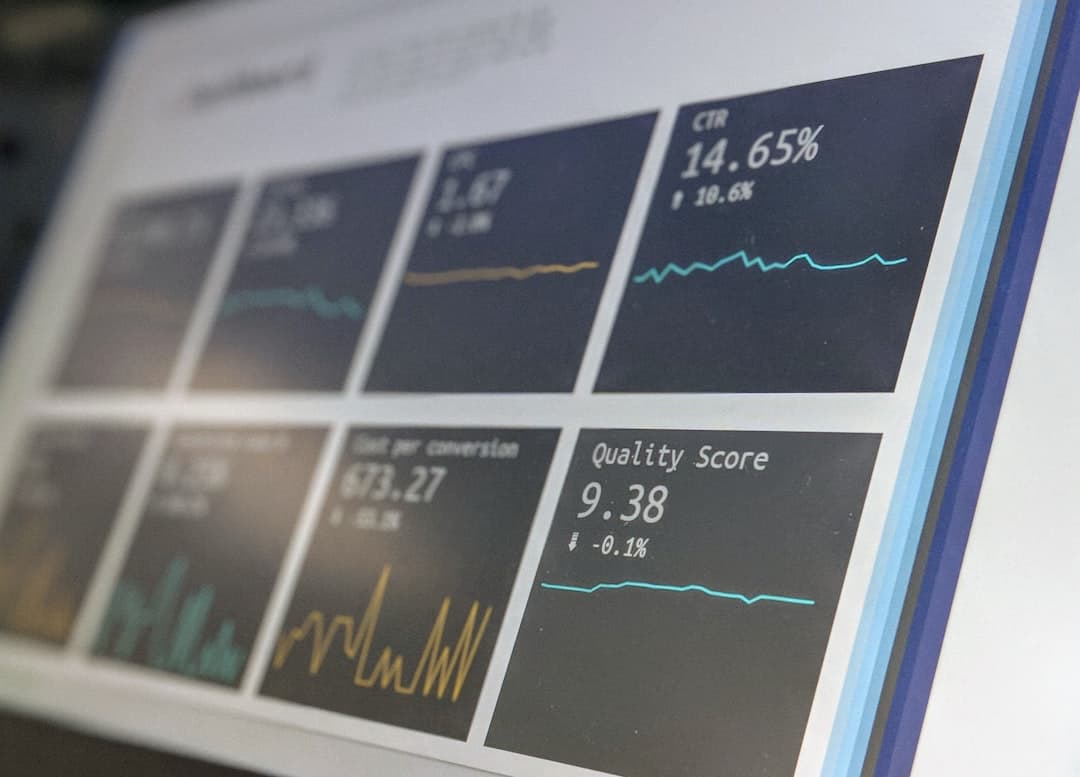
3. Build a holistic “peer dashboard.”
Combine:
- Real-time quotes from the Stock Quote API.
- Historical performance from chart data.
- Valuation and quality scores from the Financial Ratios API and Key Metrics API.
This is where the framework becomes useful not just for research PDFs but also for live monitoring in dashboards or internal tools—something FMP's APIs are widely used for in practice.
Example: How cross-dataset contradictions reveal competitive insights
With all layers in place, the real power of the framework is in spotting contradictions between datasets. A few illustrative patterns:
1. Cheap on ratios, expensive on expectations
- Data: Below-median P/E and EV/EBITDA vs. peers, but above-median consensus revenue and EPS growth from the Financial Estimates API.
- Interpretation: The market may be underpricing execution capabilities or discounting prior missteps. That gap can suggest a re-rating candidate if recent transcripts and segment data show credible progress.
2. Premium multiple, lagging fundamentals
- Data: Top-quartile valuation ratios but average or below-average ROE/ROA and margin trends from Financial Ratios API and Income Statement API datasets.
- Interpretation: Narrative, brand, or product optionality is carrying the story. Cross-checking Latest Earning Transcripts API helps you assess whether that premium is still being earned in how management speaks about innovation, pipeline, and competitive moats.
3. Growth segments vs. muted guidance
- Data: Revenue Product Segmentation API reveals rapidly growing, high-margin segments, but Financial Estimates API and Price Target Summary API show modest top-line expectations.
- Interpretation: Either the market is skeptical about scalability, or the company is intentionally conservative in guidance. This kind of mismatch is a natural starting point for follow-up calls and deeper primary research.
4. Optimistic tone, deteriorating ratios
- Data: Transcripts full of upbeat commentary on demand and margins, but Financial Ratios show rising leverage, falling interest coverage, and compressing margins.
- Interpretation: Management tone is out of sync with financial reality—a potential early warning signal for downside risk or future estimate cuts.
How do you operationalize this framework without writing code?
Even though FMP is API-first, the analytical structure can be implemented in multiple ways:
- Excel / Google Sheets: Use FMP's add-ons and connectors to pull API outputs into tabular models.
- BI tools: Load normalized outputs into warehouses or spreadsheets, then visualize ratio quartiles, segment mix, and relative performance.
- Quant and research stacks: For teams that do code, community wrappers in Python, R, and Julia already exist, making it straightforward to automate the entire pipeline.
The key is to lock the methodology first—peer rules, KPI definitions, and interpretation logic—then choose the implementation channel that fits your team's skills.
FAQs: API-driven competitor benchmarking with FMP
What is the main benefit of API-driven competitor benchmarking vs. traditional comps?
API-driven benchmarking keeps your peer model synchronized with live data—financial statements, ratios, estimates, and transcripts—rather than relying on static, manually updated spreadsheets. This supports faster refresh cycles, more consistent methodology across teams, and deeper cross-dataset checks that are difficult to maintain by hand.
How do I select a good peer set using FMP?
Start with the Stock Peer Comparison API to obtain an objective, sector- and size-based peer list, then refine with analyst judgment based on business model, geography, and strategy. Document your criteria so your investment, FP&A, and strategy teams share the same definition of “peer” across presentations and decisions.
Which FMP datasets are most important for equity analysts?
For equity research, high-impact datasets include:
- Income Statement API and Key Metrics API for fundamental baselines.
- Financial Ratios API for profitability and valuation.
- Financial Estimates API and Price Target Summary API for forward expectations and market sentiment.
- Latest Earning Transcripts API datasets for narrative.
- Stock Quote API for real-time and historical price reaction.
How often should I refresh a peer benchmarking model built on FMP?
Most teams:
- Refresh quote and chart data daily or intra-day for live dashboards.
- Update ratios, fundamentals, and segments each quarter as new filings are incorporated.
- Re-evaluate peers, estimates, and price targets around major events (earnings, M&A, product shifts).
Because FMP continuously updates these datasets, frequency becomes an analytical choice rather than a data constraint.
Can FP&A and corporate strategy teams use this framework without coding?
Yes. FP&A and strategy teams can rely on:
- FMP's Excel and Google Sheets add-ons to pull API outputs directly into models.
- CSV exports and bulk endpoints for ingestion into planning tools or BI dashboards.
The framework is intentionally methodology-first: define peers, KPIs, and narratives; then choose low-code tools to operationalize.
WACC vs ROIC: Evaluating Capital Efficiency and Value Creation
Introduction In corporate finance, assessing how effectively a company utilizes its capital is crucial. Two key metri...

BofA Sees AI Capex Boom in 2025, Backs Nvidia and Broadcom
Bank of America analysts reiterated a bullish outlook on data center and artificial intelligence capital expenditures fo...

Pinduoduo Inc. (PDD) Q1 2025 Earnings Report Analysis
Pinduoduo Inc., listed on the NASDAQ as PDD, is a prominent e-commerce platform in China, also operating internationally...